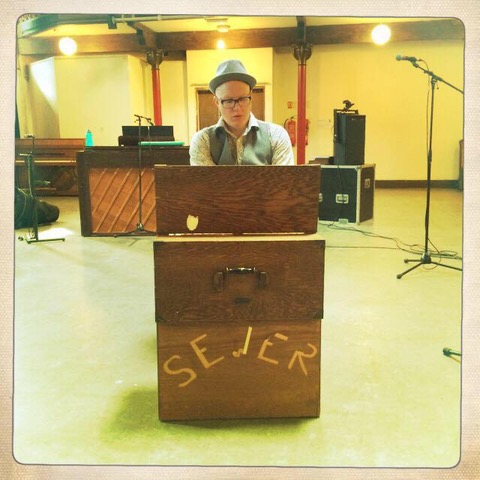
Artists in Quarantine: Lizzy Humphries, singer

The new blog series throws the spotlight on Genesis artists in lockdown: directors, writers, actors, musicians and artists, who have had to figure out ways to stay creative and practise their art in a completely new way, sometimes in extremely challenging circumstances.

The Foundation wants to give the Genesis network an opportunity to showcase what they have been up to, to share the challenges they face and to show, with the intention of inspiring others, how they find resilience and creativity in lockdown.

Lizzy Humphries

Lizzy is a soprano and began her career as part of the Genesis Sixteen V. Her highlights include performances with The Sixteen, The King’s Consort and Britten Sinfonia Voices. Lizzy is a ‘Making Music UK Selected Artist’ meaning she regularly performs as a soloist with UK choral societies. Solo highlights include singing Monteverdi’s Lamento della Ninfa at the NCPA in Mumbai and performing arias at London Handel Festival.

My time in Genesis Sixteen was the catalyst to my singing career – it was what made me decide that singing was what I wanted to do with my life and so I feel very lucky to have been a part of it. I’ve enjoyed singing professionally for the last three years but, like many other musicians, in the middle of March all my work disappeared and everything started to look a little bit different.

It was a very peculiar experience watching all of the work I’d been looking forward to and working towards just drop out of my diary. The first thing I learnt was how easy it was to see nothing but the negative. I was (and still am!) a selected artist for Making Music UK and had seen my work as a soloist really start to pick up. I had planned for this season to be the one where I made my first steps into the world of being an oratorio soloist and losing it was really hard.

My first decision was to come up with a plan to move forwards so life didn’t grind to a halt. Like many young couples, I boldly decided to move in temporarily with my boyfriend. He’d had to move out as he was living with a vulnerable person so we thought ‘why not give it a try?’. We haven’t killed each other yet (despite a heated discussion over the deserved winner of a game of Wii Golf) so I feel very happy with my confinement situation.

Musically, it’s been tricky to carry on working as I was before. It certainly took a few weeks of adjustment. It’s been exciting to learn new skills, and found that this time has particularly helped me improve my technological skills. I’ve been blown away by the kindness of people I’ve previously worked for and the creativity they’ve shown in finding new ways for me to carry on working. I’ve recorded solo pieces in my living room with an organ playing through headphones which has been a bizarre experience, particularly when I imagine it being used for a virtual church service, but it’s been very rewarding. I’ve even been able to sort an online recital in June.

Without having the day to day gigs it can feel like your career is slipping through your fingers, but every time I get to sing something for someone, I remember why I’m doing it.  It reminds me that I love singing and that’s why it’s worth still pushing forward and working hard. Besides, at some point, the work will return and I want to be ready for it. Luckily, my singing teacher is running weekly zoom group lessons so that her pupils can all share their experience of learning while in lockdown. Hearing the opinions of other singers and acknowledging their work ethic has really helped to push me forward at a time where it’s so easy to be stagnant. 

I also have something a bit different in my life that is really helping to get me through this time. Last September I decided that I needed to find some sense of routine in my routine-less life as a freelance musician. While I was busy, nothing was ever repeated week on week and I felt it was affecting my productivity. I’ve always loved animals and in a moment of madness I thought I’d try out volunteering at Vauxhall City Farm. The farm is a charity that exists as a community project enabling people in the local area to see animals in the city and educate them on nature.  Alongside my musical career I now spend time caring for the animals and running education workshops for children from local schools. 

While seemingly everything else in the world has stopped, the animals still have to be cared for. So, twice a week, I’m still cycling over to Vauxhall looking after all the animals. It’s a busy time at the farm and we’ve had the arrival of two beautiful baby goats and two lovely lambs not to mention a chattering of chicks! 
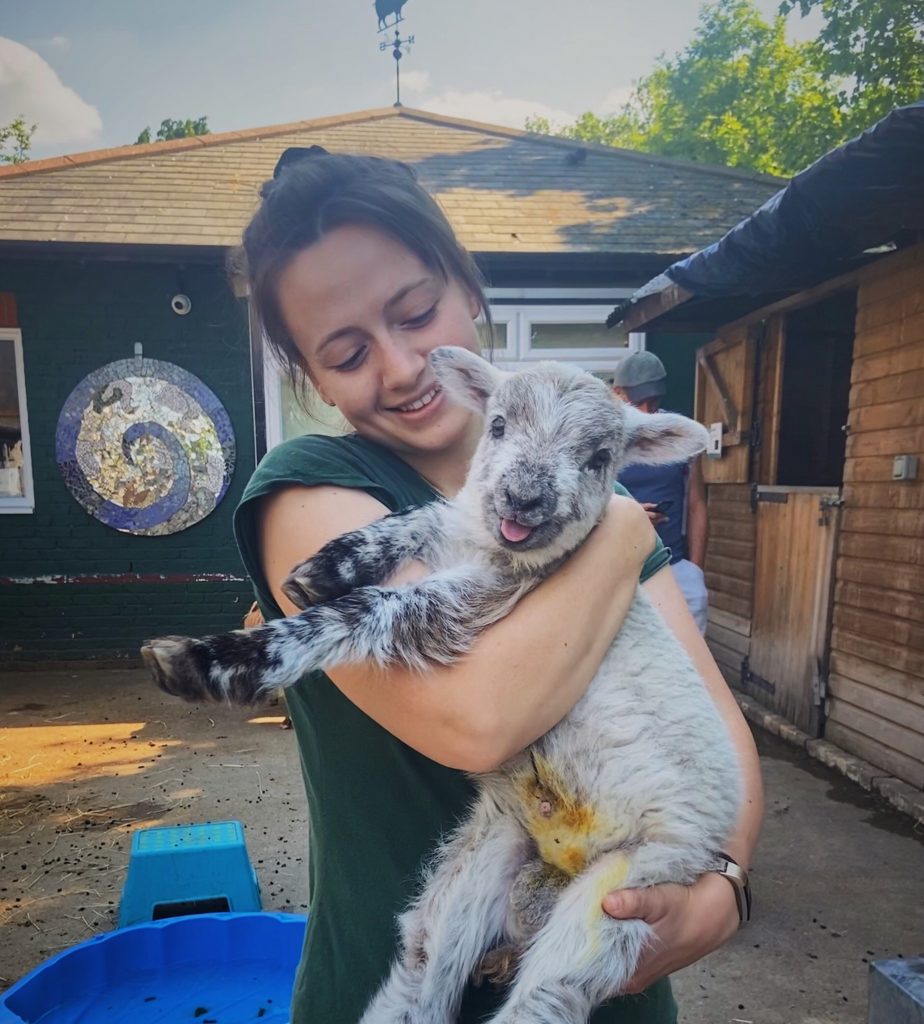
Lizzy and one month old Hemmy

For me, switching up my life and including something completely different to singing has been a hugely positive experience. If there was any advice I could impart to other young artists it would be that while it is so important to dive head first into your musical career, finding the time to do something a little different can spark inspiration in ways you’d never expect.

For me, the fresh air, the exercise, the new people, the bond I’ve made with the animals and the brand new skill set have all helped to keep me mentally active which continues to push me towards improving myself and my music.

I come back from my days at the farm tired (in a good way), refreshed and more energised which always means I get straight back to music.  Having something different in my life has also helped me get through this difficult lockdown situation.

It can be so hard to motivate yourself when you’ve been left with an empty diary and I think musicians too often beat themselves up for not spending hour after hour practising. Taking a small amount of time to learn a different skill can really help you reset and restore your love for your art.

I don’t think that I’ll be earning a proper living from singing for a long time and so I am applying for jobs that revolve around caring for animals in the interim.  I feel very lucky that I have picked up the practical skill set in the last year that has enabled me to apply for these jobs as it gives me hope I’ll still be able to earn money doing something that I enjoy.

Being fairly new to self-employment has meant that I’m not getting very much money out of the self-employment scheme as it’s based on a three year average, so I absolutely have to get a second job for now. I don’t have the option of saving money by moving back with my parents as I am on a fixed-term contract so unfortunately I have to keep finding ways to pay my rent.

Obviously I never intended to have to find another job, and in some ways it’s heart-breaking, but I’m trying to see it as a really exciting opportunity to live out the common question of “what job would you have done in another life?”, just for a little bit. It will be an excellent story when I’m famous, right?! Jokes aside, I truly believe that the only way to get through this is to find the positives, and take every unexpected change as a great opportunity. For me, that is the best way to stay motivated and committed to my art. 

Once this is all over I hope to hit the ground running, auditioning for a Masters at music college and branch further into opera than I had before lockdown. I’ve been using this time to learn as much repertoire as I can, getting creative with technology and improving my keyboard skills. I’ve been very fortunate that people have thought of me for their concerts next year and I hope to do that kindness justice by not letting my practice routine slip while we’re in isolation.

I’ve found moments of extreme calm during this time and I’ve really appreciated the space to reflect on the things that work and the things that don’t.  I want this to be a positive point in my career, not a negative one. I intend to look back and know that I used every day to my absolute advantage and above all, I need to make sure the momentum that I’ve built up since lockdown started is continued when it is lifted.

Find out more about Lizzy here and about the Vauxhall City Farm here.
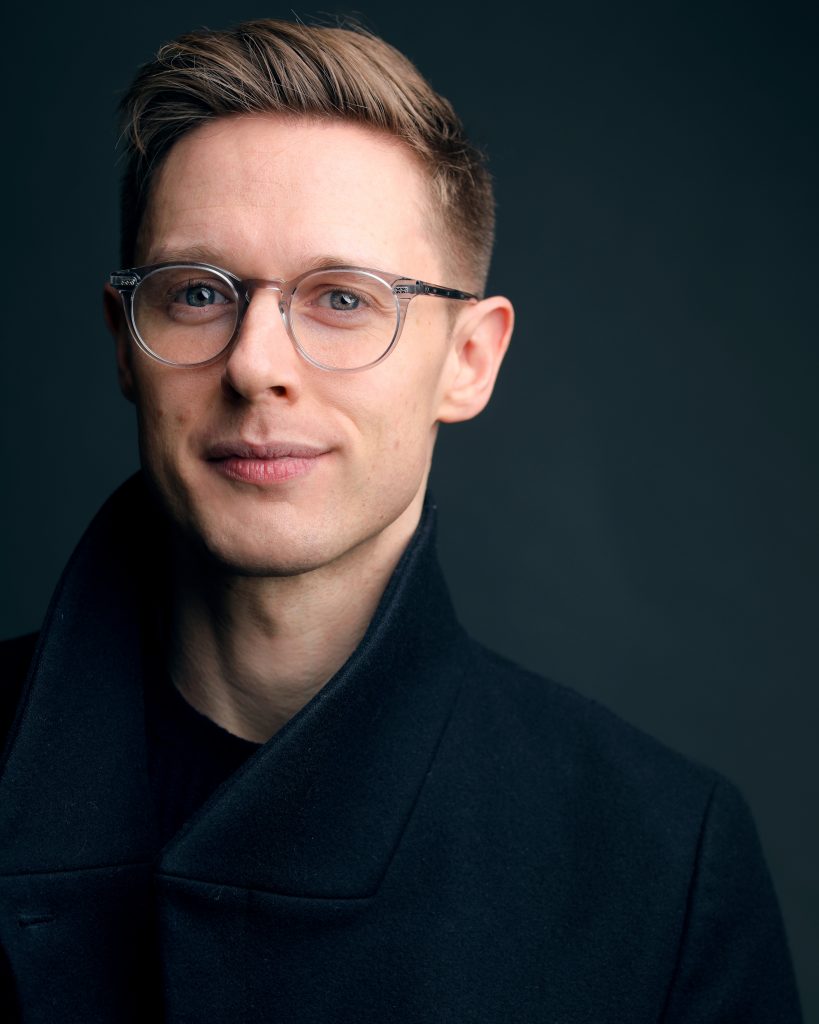
Artists in quarantine: Sam Barnett, actor

The new blog series throws the spotlight on Genesis artists in lockdown: directors, writers, actors, musicians and artists, who have had to figure out ways to stay creative and practise their art in a completely new way, sometimes in extremely challenging circumstances.

The Foundation wants to give the Genesis network an opportunity to showcase what they have been up to, to share the challenges they face and to show, with the intention of inspiring others, how they find resilience and creativity in lockdown.

Sam Barnett

Samuel is a theatre, television and radio actor, and the first of twenty-five Genesis LAMDA scholars (class of 2001). A Tony and Olivier Award nominee, Samuel appeared in The History Boys, Twelfth Night, Penny Dreadful, any many more shows and plays. He played the title role in Dirk Gently’s Detective Agencyfor BBC America.

How are you doing? What’s your current confinement situation, who’s on your quaranteam?

I am currently in lockdown in Nottingham. I normally split my time between London and Nottingham, where my partner in Artistic Director of Nottingham Playhouse. On march 16th I had three jobs cancelled so I left London and came to Nottingham as I knew lockdown was imminent. So my partner and I are each other’s quaranteam.

It has been a difficult time. My Dad died of covid-19 on April 1st after two weeks in hospital, 11 of those days spent on a life support machine. We were unable to see him or speak to him. The nurses and doctors were extraordinary in their care for him.

Communication with the hospital was difficult. Families are normally allowed by the bedside of a very sick or dying person. Information can be easily given to the families and the families can support each other and the sick loved one. In this situation, information was difficult to get and the nurses were having to do all the emotional grunt-work that families normally do.

I cannot imagine how traumatic this time must be for those working with the very sick in Intensive Care. It has been an impossible time. I am grateful in some ways for the lockdown which is giving me the time and space to grieve.

Are you able to work, are you inspired by what we are going through or do you find it challenging?

I am very fortunate in that I have been able to work. Oddly enough, with my Dad dying, the last thing I have wanted to do is acting. I have no desire to be anyone other than myself right now. But a lot of audio work has come in and I am grateful for the distraction and the income.

I have set up a duvet fort and invested in some audio equipment. It’s quite a big financial outlay initially but it has paid for itself with the work that has come in. I had a self-tape audition which I found a lot harder to do than the audio work I’ve been doing.

There is something about being seen when grieving that makes me feel vulnerable. Often, I am able to use what is going on in my life as fuel for acting, but it’s perhaps a bit too soon for that. 

Do you have a routine to stay creative? 

I have a routine which I think helps me stay ready to be creative. I need to eat and sleep well and to exercise. I am also reading and watching theatre productions online, as well as tv shows and films. 

Do you think what you’re going through will impact your practice long term?

I think it will have a huge impact on the acting industry, particularly theatre. Perhaps there are ways to get around filming, such as testing everyone on a production and quarantining them all together until the production is completed. Theatre of course is a very different medium in that involves an audience and you cannot quarantine all the actors and stage technicians.

Unless supported by the government many arts organisations, buildings and individuals will not be able to continue. It’s an extremely worrying time. For me on a personal level, I don’t know how things will pan out. It is interesting that in this time of lockdown the one thing we have all turned to is entertainment. The message that needs to be put across both in the government’s mind and in the minds of the public is that a huge amount of these TV shows and movies that people are watching are written by writers who started in theatre, acted by actors who started in theatre, directed by directors who started in theatre.

Theatre is a major seeding ground for screen. It is the foundation. If theatres are allowed to fail, there will be less opportunity for development for those writers and actors and directors who also make screen work, and the work will be less diverse. The link between theatre and screen needs to be impressed upon the people who make the decisions about what gets supported and what gets left to die out.

Theatre in itself is a vital art form, regardless of how it feeds the screen industry. It is a collective experience that reflects, celebrates, investigates and elevates the society in which it takes place. Theatre genuinely changes lives and I know many theatre and arts organisations that have huge community outreach programs. If these places are allowed to fail, society also suffers.

Is there any advice you would like to share to fellow artists, audiences or organisations on how to find resilience?

Resilience for me is about allowing everything to be just as it is in this moment. I have times of feeling that I can cope and be creative and positive and active, and other times where I need to sit and zone out and watch Netflix and do nothing. Both are completely acceptable. Pressure is the worst thing we can put on ourselves at the moment.

Resilience is about knowing that you are enough, you don’t have to be “busy” in order to be ok. Gently and quietly look after yourself so that you’re ready for when opportunities come your way, whether in lockdown or not. That extends from the individual to the level of organisations.

I see my partner running the Playhouse full-time in lockdown and laying all the groundwork for when we come out of lockdown and audiences are ready to come back.

And to audiences I would say please support the organisations that matter to you if you are able to, and that doesn’t have to be financial support. It can be watching things that organisations put out online at the moment. Those little things that we do now as audiences will make a big difference to organisations in the future.

What are your hopes for the future? 

I hope things don’t go back to the way they were. This pandemic has forced us to stop at a time when things were reaching a fever pitch across the world with the environment and hate and division. I hope the world is a kinder place.

This pandemic has not hit people equally and there will be more poverty and famine and pain for many people because of this coronavirus. Governments have shown that they can make sweeping changes to the way things are done when they have the will to do so.

I hope that kindness prevails, that people who are in need get their needs met, and that the comeback is a green one.

Anything to plug?

NT Live are broadcasting a show on YouTube every Thursday for free. Many theatres are offering free productions online. It’s a great way to support those organisations. TV and film is magnificent of course, but it’s great to get that live theatre audience feel from the comfort of your own sofa. 

Artists in quarantine: Jim Fortune, songwriter

The new blog series throws the spotlight on Genesis artists in lockdown: directors, writers, actors, musicians and artists, who have had to figure out ways to stay creative and practise their art in a completely new way, sometimes in extremely challenging circumstances.

The Foundation wants to give the Genesis network an opportunity to showcase what they have been up to, to share the challenges they face and to show, with the intention of inspiring others, how they find resilience and creativity in lockdown.

Jim Fortune 

Jim Fortune is a composer, songwriter and arranger. He wrote the music for the National Theatre’s musical version of Pericles in 2018 and for its Olivier Award-nominated musical Mr Gum and the Dancing Bear – The Musical!, based on the award-winning children’s books by Andy Stanton. He is developing a new musical with NT Artistic Director Rufus Norris as part of the Genesis Music Theatre Programme. 


What’s your current confinement situation, who’s on your quaranteam? 

I am currently confined at my home in North London with my partner Victoria and our small boy, Flynn, mostly writing from my shed-studio at the bottom of my garden, looking at a field. 

Are you able to work, are you inspired by what we are going through or do you find it challenging? 

The whole world seems to be listening to each other right now. We are not going out, but the internet is providing some great, inspiring art. I am finding motivation from amateur choirs to symphony orchestras, to Sondheim tributes to the Rolling Stones getting together online. The forced isolation can only focus the mind. That’s good! 

Do you have a routine to stay creative?  

Yes. A routine for me is helpful. It helps having a kid in the house who needs attention – focused time with him, then focused time alone. We always start the day with exercise (inevitably Joe Wicks) and end the day with a walk in our local woods. Three meals a day with the family also gives the day structure. That’s never happened before! 

Do you think what you’re going through will impact your practice long term? 

I think people who try to write music can be natural self-isolators, so nothing will change there. The whole theatre community needs to continue to collaborate and rely on each other for motivation and support. I hope that will be a positive impact – we are in this together. 

Is there any advice you would like to share to fellow artists, audiences or organisations on how to find resilience? 

It won’t always be like this! I understand that, for a while, there will be a ‘new normal’, but audiences will be chomping at the bit for material that artists are cooking up. There will be an explosion of lovely things to come and we can not only enrich people’s lives, but also (crucially) enrich the economy. It may take some time, but be strong and have pride in your jobs. We matter, so lead from the front. Nothing will ever top the experience of live art. 

What are your hopes for the future?  

Once we can go out, I hope that the arts and artists (especially freelancers) will be valued by everyone in a new way. Maybe people took us all for granted. Also, maybe we will get to hear from people that have found their voice during lockdown – forgot they had a talent, and rediscovered it in all the new time that has been gifted to them.  

Anything to plug?

Lots of things have being cooked in my shed, but nothing to plug just yet. Look out for a podcast I am producing called Rod’s Rod-Cast. Myself, theatre director Sean Holmes and writer/comedian Ed Gaughan, will be asking our (well-known) guests three questions about their future, and they will be performing their favourite song with our house band. 

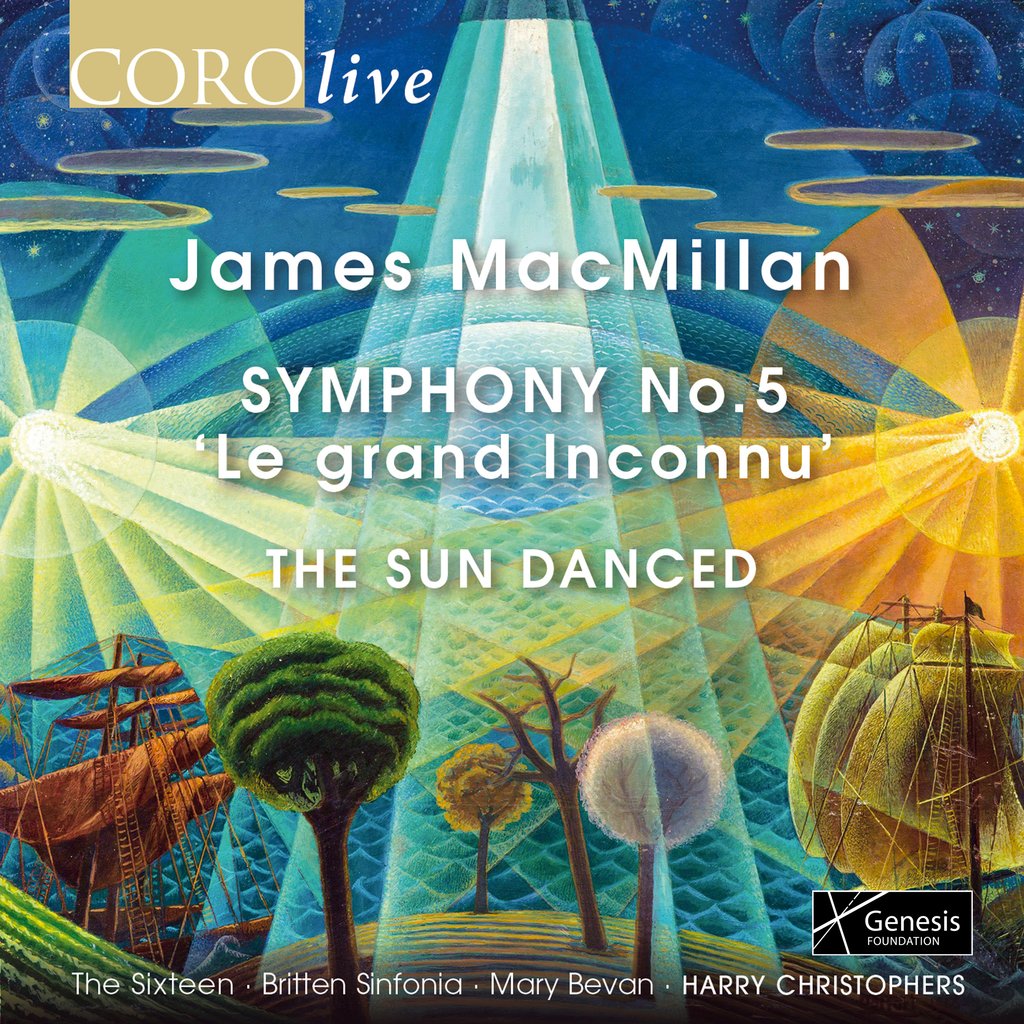
Premiere recording of James MacMillan’s Symphony No. 5 ‘Le grand Inconnu’ to be released 3 April

The premiere recording of James MacMillan’s Symphony No. 5 ‘Le grand Inconnu’ will be released on Harry Christophers and The Sixteen’s CORO label.

Recorded live at the Barbican Hall, James MacMillan’s powerful large-scale choral symphony was commissioned by the Genesis Foundation for Harry Christophers and The Sixteen and is performed by them with Britten Sinfonia and Genesis Sixteen, on this recording. The album also includes MacMillan’s The Sun Danced.

The world premiere of the work was given at the Edinburgh International Festival in August 2019 by Christophers and The Sixteen to a standing ovation and rave reviews. The Spectator described how “the whole symphony pulls quietly towards consonance and a vast, cumulative sense of affirmation”, while The Times commented that the work is “likely to join MacMillan epics…in gripping the ears, spearing the heart and moving the soul.”

The Genesis Foundation is Europe’s largest commissioner of sacred choral music and ‘Le grand Inconnu’ is the 22nd commission for Christophers and The Sixteen. Over the last decade this partnership has resulted in commissions from 14 composers, as well as six albums on the CORO label and the first ever live-streamed concert from The Sistine Chapel. To order the recording of ‘Le grand Inconnu’, click here.

Listen here to the podcast featuring Sir James MacMillan and Cardinal Vincent Nichols discussing the Fifth Symphony.

2020 Genesis Prize awarded to Rebecca Salter, President of the Royal Academy of Arts

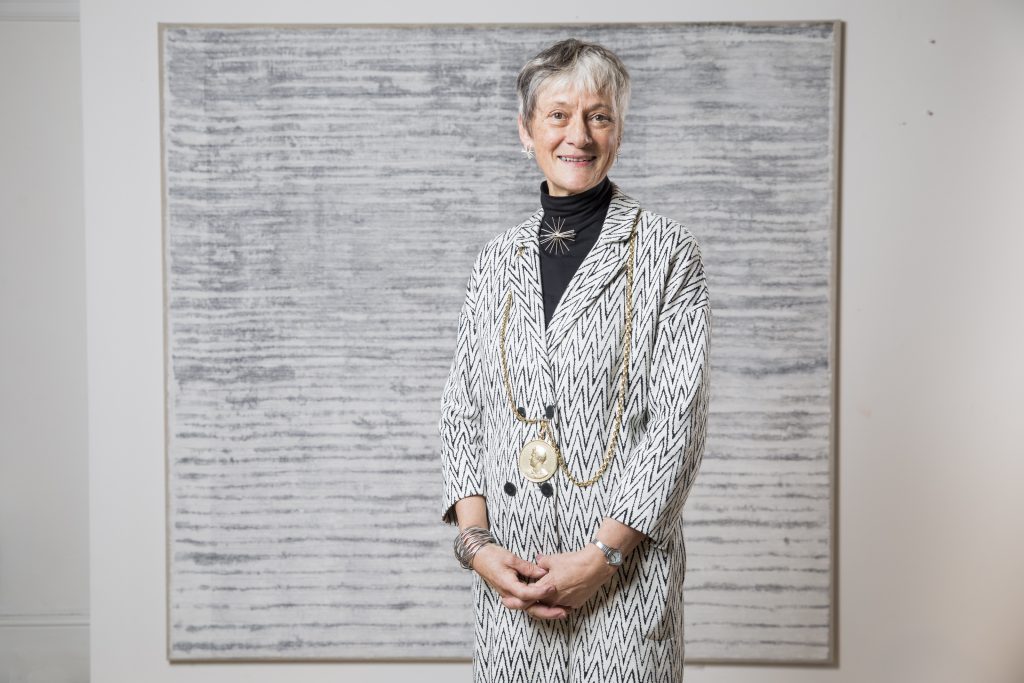
A photo of Rebecca Salter stood in front of a black and white art work, wearing a similarly coloured jacket with a black top underneath and a long gold necklace. Rebecca has short grey hair, and is holding her hands together in front of her and smiling at the camera.

The Genesis Foundation today announced Rebecca Salter, President of the Royal Academy of Arts, as the winner of the 2020 Genesis Prize. Worth £25,000, the Genesis Prize is the only prize which recognises outstanding mentoring of artistic talent and gives winners the opportunity to expand on their work.

Ms Salter was selected for the 2020 Genesis Prize for her work as Keeper of the Royal Academy where she was responsible for guiding the RA Schools. Reflecting the crucial role of mentoring in the development of new artistic talent, which is at the core of the Genesis Foundation’s ethos, she will use the prize money to develop a new programme that will provide graduates of the RA School with the professional skills and resilience training needed to survive as practising artists in the commercial world.

John Studzinski, Founder & Chairman of the Genesis Foundation, said:

“I am delighted that the 2020 Genesis Award goes to Rebecca Salter for her work as Keeper of the Royal Academy. Everyone at the Genesis Foundation has been impressed by Rebecca’s passion and commitment to nurturing young artistic talent. Her ability to recognise the changing needs of young artists and to develop practical programmes to support them makes her a worthy winner of the Genesis Award.  We warmly welcome her into the Genesis Foundation’s family of artistic leaders.”

Rebecca Salter said:

“I am delighted to receive the 2020 Genesis Prize in recognition of my work with the students at the Royal Academy Schools. One of the founding principles of the Royal Academy was to have a school of art. Over the last 250 years it has trained artists from JMW Turner RA to Lynette Yiadom-Boakye, many of whom go on to contribute to the artistic and cultural life of the UK and beyond. This prize will enable the RA Schools to develop a new programme teaching resilience and to offer post-graduation support.”

Previous winners of the Genesis Prize are Joe Robertson & Joe Murphy of Good Chance Theatre; Hadrian Garrard, director of Create London; Polly Staple, Director of Collection, British Art, Tate (for her work at Chisenhale Gallery) and Hamish Dunbar, artistic director of Café Oto.

A new Genesis Podcast has been released featuring Rebecca Salter in conversation with psychotherapist and lecturer Barry Smale. Focusing on resilience, the pair discuss the programme Salter is starting at the Royal Academy with her Genesis Prize award. The podcast can be listened to here: https://genesisfoundation.org.uk/arts-podcast/ and on all major platforms, including Apple Music, Spotify and Soundcloud

Genesis Foundation commissions light up Durham Cathedral

LIGHT, a dazzling installation by artist Chris Levine – originally commissioned by the Genesis Foundation in 2010 – goes live on 20 March 2020 in the 12th-century Galilee Chapel at Durham Cathedral.

Compounding its impact will be a soundtrack of sacred choral music, all of it commissioned by the Genesis Foundation and performed by The Sixteen under their conductor Harry Christophers. Among the composers is Durham native Will Todd, whose Among Angels accompanied the first presentation of LIGHT at Holy Trinity Church, Marylebone a decade ago.

The installation, which will remain in place until the end of the year, heralds the Genesis Foundation’s celebrations for its 20th anniversary in 2021. For Durham Cathedral, it marks out 2020 as the Year of Pilgrimage and signals the launch of the Northern Saints Trails, which affirms the Cathedral as a place of veneration and pilgrimage for visitors from all over the world. The Galilee Chapel houses the tomb of The Venerable Bede, a monk considered the greatest Anglo-Saxon scholar, who died in the year 735.

The Genesis Foundation has provided financial support for the installation, for which the headline sponsors are the Friends of Durham Cathedral.

LIGHT features a matrix of lasers in the form of a cross and an image of the St Cuthbert Pectoral Cross, one of the Durham Cathedral’s treasures. An immersive work that gently bathes visitors in light, it reflects the medieval ritual of foot-washing and creates a welcoming space for pilgrims who have journeyed to Durham.

“My work as an artist is a journey into exploring a deeper connection with our higher self through the use of light and meditation,” says Chris Levine. “In this elusive space of lightness, we can recalibrate, harmonise our senses and discover who we really are … Laser light is very pure, just single frequency light, and by focusing our attention on it and surrendering to the sensory experience, one enters a meditative state where stillness becomes a portal to the Divine.

John Studzinski, founder and chairman of the Genesis Foundation explains that: “In nurturing the work of a wide range of artists, the Genesis Foundation takes ‘art and faith’ as one of its themes. We are delighted to celebrate the Durham Year of the Pilgrimage with a work we commissioned from one of today’s most exciting visual artists and to amplify it with music created for the Genesis Foundation by some of today’s most exciting composers.”

Over the past two decades the Genesis Foundation has established itself as the UK’s foremost commissioner of sacred choral music, engendering some 25 new works, the majority for performance by Harry Christophers and The Sixteen.

Find out more about the upcoming installation here.

John Studzinski to chair the first of the Lord Mayor of London’s ‘Cultural Conversations’ series at Mansion House

On 24 February, Genesis Foundation Founder & Chairman John Studzinski will chair the first of three ‘Cultural Conversations’ hosted by William Russell, Lord Mayor of the City of London at Mansion House.

Funded by the Genesis Foundation, these conversations are part of the Lord Mayor’s focus on the power of arts and culture and will bring together leading figures from the UK’s cultural scene.

The first debate addresses ‘Art for Social Change’ and focuses on art and its ability to help people rethink and reframe their values and behaviour. Panel members taking part are:

  • Farooq Chaudhry OBE, Co-founder and Producer of Akram Khan Company
  • Chichi Nwanoku OBE, Founder, Artistic and Executive Director, Chineke! Orchestra, Europe’s first majority Black and Minority Ethnic (BAME) orchestra
  • Jemma Read, Head of Bloomberg’s Philanthropy & Engagement Europe, the Middle East and Africa (EMEA) and Asia Pacific (APAC)
  • Indhu Rubasingham MBE, Artistic Director, Kiln Theatre, Kilburn

The second talk, which will be held on 15 April, will take architecture, innovation and place-making at its key themes, while the third talk on 30 September will look at the arts and philanthropy. All three events at The Mansion House are open to the public and will be live streamed via the City of London Corporation’s Twitter account (@cityoflondon).

John Studzinski CBE, Founder and Chairman of the Genesis Foundation, said:

“For a healthy society, open debate and the challenging of orthodoxies are essential. The Genesis Foundation is delighted to support the Lord Mayor’s series of discussions that will examine critical areas of the intersection between the arts and society, and the role of art in transforming communities and individuals. As the Genesis Foundation approaches its 20th anniversary, its work with leading arts organisations has repeatedly shown this transformative power. We are delighted to present many of our partners in this series who will provide insights and experiences that will stimulate meaningful discussions which we hope will ignite debate beyond Mansion House.”

Lord Mayor William Russell said:

“Arts and culture have always been very close to my heart, because they promote a rich and vibrant creative economy and showcase the City, London and the UK as attractive places to live, learn, and work in, as well as visit. Each of these three talks will be a unique meeting of minds between these influential figures, all of them highly respected artists in their chosen field, and our audiences.”

John Studzinski receives prestigious US award for “Common Good” Philanthropy

On Friday 7 February, John Studzinski CBE will receive the St Katharine Drexel Award in Catholic Philanthropy from the Board of Founders and Donors Interested in Catholic Activities (FADICA) in Florida, in relation to his charity Arise.

FADICA is a leading philanthropic organisation, bringing together more than 50 private foundations with an interest in Catholic activities. Each year FADICA honours three individuals who have made exemplary and outstanding contributions to philanthropy on behalf of the Church and the Common Good.

John Studzinski has been a leader in the world of philanthropy for the past 35 years. As well as being the founder of the Genesis Foundation, Studzinski ‘s commitment to fighting slavery led him to found Arise, an anti-slavery charity which works to strengthen communities against the scourge of modern slavery and human trafficking.

Alexia Kelley, president and CEO of FADICA, said:

“We are honoured to present the St. Katharine Drexel Award in Catholic Philanthropy to John Studzinski. For many years, his approach to philanthropy has embodied so much of what FADICA promotes: giving that is ignited by faith, in service to human dignity and the common good. John has devoted a large proportion of his personal wealth to many good causes, and he has also given generously of his time – convening people of goodwill, encouraging them to link arms and work together towards their common goals of building a better world. We honour him for his example and thank him for the critical impact he is making every day through his innovative philanthropic ventures.”

Find out more about the award here.

Latest Genesis Podcast available – Alexander Armstrong and Harry Christophers on the benefits of chorister training

The fourth in the series of 20 Genesis Podcasts has been released featuring actor, broadcaster and singer Alexander Armstrong and conductor Harry Christophers. They discuss their mutual past as cathedral choristers and the wider benefits and joys of singing choral music from a young age. The pair also discuss the growing popularity of choral music, the goals and work of Genesis Sixteen, created through the partnership between The Sixteen and the Genesis Foundation, and the necessity to nurture the next generation of choral singers and composers.

The Genesis Podcast Series is being produced in the run-up to the Genesis Foundation’s 20th anniversary and consists of conversations between artists and thought leaders presented by broadcaster James Jolly.

Current podcasts in the Genesis Podcast Series are:
-Sir James MacMillan & Cardinal Vincent Nichols on the Holy Spirit and MacMillan’s Fifth Symphony
-John Studzinski CBE, Founder and Chairman of the Genesis Foundation & Jan Dalley, Arts Editor of the Financial Times discussing philanthropy
-Grayson Perry & Hadrian Garrard on the artist today

Listen here.

Jennifer Tang named as the Young Vic’s next Genesis Fellow

The next Genesis Fellow at the Young Vic is to be director Jennifer Tang.

Jennifer is an award-winning theatre-maker and stage director specialising in making new work across multiple disciplines. Her practice spans new writing, devised work and theatre with music and she has extensive experience of working with communities and young people.

Jennifer will take over the role of Genesis Fellow in April from Nadia Latif who concludes her tenure at the Young Vic with the sell-out, acclaimed production of Jackie Sibblies Drury’s Fairview.

The Genesis Fellowship, a two-year grant supported by the Genesis Foundation, enables the recipient to develop their craft as a theatre director while working closely with the Young Vic’s Artistic Director, Kwame Kwei-Armah. Opportunities while in the post include supporting the theatre’s programming and artistic planning, contributing to the work of the Young Vic’s Directors Program and mentoring Genesis Future Directors Award recipients. Previous Genesis Fellows include Nadia Latif, Gbolahan Obisesan, Natalie Abrahami, Joe Hill-Gibbins and Carrie Cracknell.

The Genesis Fellow is just one of the opportunities at the Young Vic funded by the Genesis Foundation. As its founder and chairman, John Studzinski, says: “Supporting creatives in the early stages of their professional lives is central to our work. The Genesis Fellowship, now in its tenth year, has proven to be one of the finest training opportunities in the UK for talented young directors thanks to the quality of the Young Vic’s artistic leadership.”

For more information, click here.

Partners